

Dehumidifier for Dust Mites: Does Humidity Control Actually Work?
Can a dehumidifier help with dust mites? Yes, sometimes. Dust mites do better in humid environments, so keeping indoor relative humidity below 50% can make a home less hospitable to them. But a dehumidifier does not wash away allergen containing dust already trapped in bedding, carpets or furniture. And lowering room humidity has not produced the same result in every real world study.
If dust mites are a concern in your home, the best place to begin is surprisingly simple: measure your indoor humidity, make a plan for bedding and cleaning, and decide whether a dehumidifier would actually help.
Why humidity matters to dust mites
Dust mites are tiny creatures that commonly live in mattresses, pillows, rugs and upholstered furniture. They flourish in warm, moist conditions and feed on shed skin flakes. The proteins that cause allergies can be found in their waste and body particles.
A dehumidifier takes moisture out of the air. Lower humidity can make it harder for dust mites to thrive and reproduce. The Asthma and Allergy Foundation of America recommends keeping household humidity between 30% and 50%. That is a useful target, not a guarantee that every mite will disappear.
Try a hygrometer first. This small instrument measures relative humidity. Check your bedroom and any noticeably damp rooms over several days, especially during humid weather. If the reading regularly rises above 50%, a dehumidifier or air conditioning may help. If your home is already in the recommended range, adding another appliance may offer little value for that purpose.
Source: https://aafa.org/allergies/types-of-allergies/insect-allergy/dust-mite-allergy/
Will a dehumidifier remove dust mite allergens?
Not by itself. Lowering humidity changes conditions for living mites, but it does not physically remove the material already sitting in bedding and soft furnishings.
That distinction matters. You could control humidity well and still have dust mite allergen proteins in household dust. This is why mattress and pillow encasements, washing bedding, damp dusting and vacuuming with a suitable high efficiency filter remain important.
The American Lung Association recommends reducing humidity below 50%, limiting mite friendly soft surfaces, using allergen encasements and cleaning regularly.
Source: https://www.lung.org/clean-air/indoor-air/indoor-air-pollutants/dust-mites
What does the research actually show?
There is encouraging evidence, but also an important caution.
In one home study in a humid temperate climate, households that maintained relative humidity below 51% over 17 months had substantially fewer live mites and less dust mite allergen in sampled dust than comparison households. That finding supports consistent humidity control as one possible part of a home routine.
Another randomized trial of bedroom dehumidification found that the dehumidifier group did not have a greater decline in dust mite allergen than comparison groups. The authors noted study limitations and concluded that any measured effect was small.
These results are not mutually exclusive. Your home's climate, actual humidity, where mites are living and how consistently moisture is controlled can all influence what happens. The fair conclusion is that humidity management can help create less favorable conditions for dust mites, but a dehumidifier alone should not be presented as a guaranteed allergen removal method.
Research:
https://pubmed.ncbi.nlm.nih.gov/11149998/
https://pubmed.ncbi.nlm.nih.gov/10931126/
A practical bedroom routine that works alongside humidity control
1. Measure before buying
Keep a hygrometer in your bedroom. If readings already stay around 30% to 50%, focus on cleaning and allergen barriers before spending money on a new dehumidifier.
2. Wash bedding weekly
Wash sheets and washable bedding every week, following fabric care instructions. AAFA recommends hot water of at least 130°F when fabrics tolerate it. Use appropriate safety precautions with hot water.
3. Protect your mattress and pillows
Use tightly woven, allergen resistant covers designed for mattresses and pillows. These create a barrier to dust mite reservoirs that are difficult to clean thoroughly.
4. Clean without stirring up unnecessary dust
Damp dust hard surfaces and vacuum carpets and upholstery with a vacuum equipped with a high efficiency particulate filter. If dust bothers you when cleaning, consider having someone else vacuum and allow disturbed dust to settle before returning.
5. Think about the fabrics around you
Heavy curtains, wall to wall carpeting, upholstered furnishings and piles of soft items can hold dust. You do not need to redesign your entire home at once. Begin with the bedroom and prioritize what is practical to clean.
AAFA guidance: https://aafa.org/allergies/types-of-allergies/insect-allergy/dust-mite-allergy/
Where Allergy Defender fits in
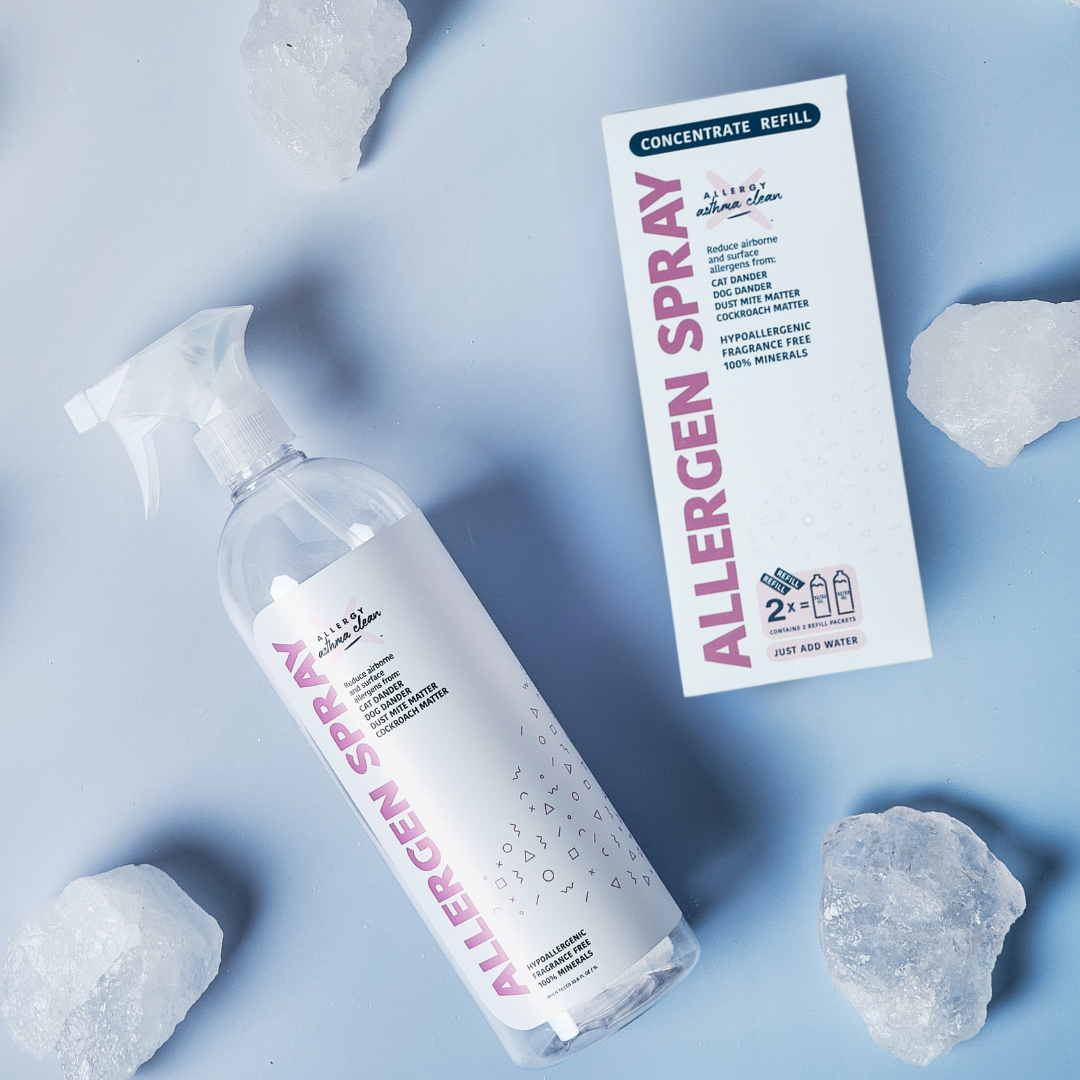
Humidity control and household cleaning solve different parts of the environmental allergen problem. If you are reviewing additional ways to address allergen proteins on suitable surfaces, you can also read about our family's mineral based Allergen Spray.
We describe independent laboratory testing for specific allergen proteins. Those laboratory observations are not a promise of symptom relief, treatment of asthma, or a guarantee that all the air in a home will be cleared. The spray is intended for misting air and appropriate home surfaces according to its instructions, not for direct application to pets. Let treated surfaces dry as directed.
For more home routines and educational articles, explore the Allergy Defender Learn Center. Our deeper explainer on how allergen sprays work discusses how to evaluate test claims.
Frequently asked questions
What indoor humidity should I aim for if dust mites are a concern?
AAFA recommends approximately 30% to 50% relative humidity. Measure rather than guessing, and avoid allowing moisture to build up indoors.
Do dust mites die immediately when humidity falls below 50%?
No instant elimination should be assumed. Dust mite survival depends on exposure conditions, and lowering the humidity in a room does not mean every fabric or microscopic habitat instantly reaches the same conditions.
Will turning on a dehumidifier clear dust mite allergens from my mattress?
No. Use suitable mattress and pillow encasements and a consistent bedding and cleaning routine. Dehumidification affects moisture, not the physical dust already present.
Do I need a dehumidifier if I live somewhere dry?
Not necessarily. Check indoor relative humidity first. You may already be within the recommended range.
Is a dehumidifier enough if I have dust mite allergy symptoms?
A dehumidifier is a home environment tool, not a medical treatment. Ask a qualified clinician about persistent allergy or asthma symptoms and follow prescribed care.
The bottom line
A dehumidifier may help keep dust mites from thriving in a humid home. It is most useful when it actually maintains lower indoor humidity and is combined with regular cleaning, bedding care and allergen barriers. It does not replace those basics.
Our goal at Allergy Defender is to help families make informed decisions about the environment they share. Protect the people you love, one practical step at a time.