
[DUPLICATE - DO NOT PUBLISH] Cat Dander Spray (merged into Cat Allergy Spray)
Cat dander spray can reduce cat allergen on furniture, carpet, bedding and in the air when you use it the right way. Here's how it works, where to spray, and what it can't do.
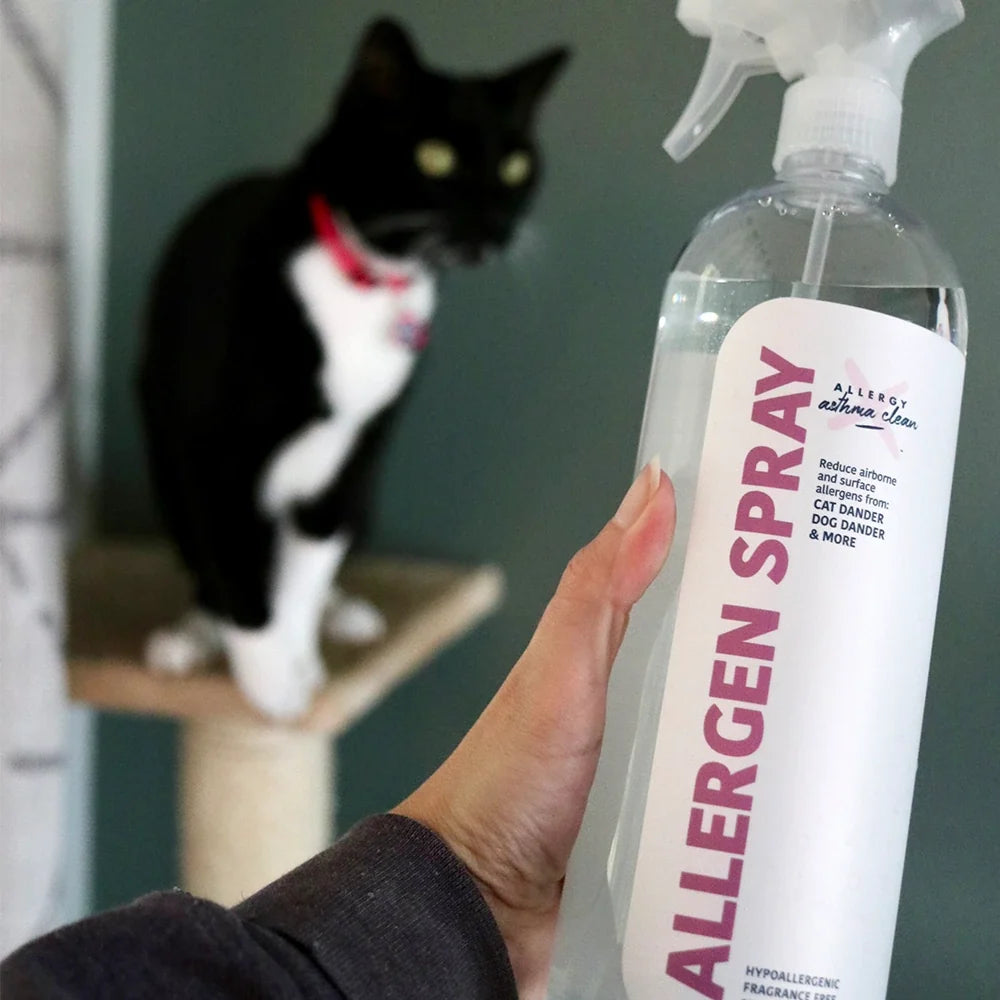
Our family makes Allergen Spray, a fragrance-free mineral spray for the air and the couches, beds and rugs you share with your pets. Shop Allergen Spray
Quick answer: Yes, a cat dander spray can work, as long as you use it the right way. Good sprays neutralize the cat allergen (Fel d 1) that settles on couches, carpet, bedding and in the air. You spray your home, not your cat, and you keep vacuuming and washing, because a spray reduces allergen but doesn't replace cleaning.
If you love a cat but your eyes and nose don't, you've probably typed "cat dander spray" into a search bar at 11 p.m. We get it. Our family started Allergy Defender after two "hypoallergenic" poodles triggered an allergic asthma attack that nearly took our daughter's life. Here's the plain-spoken version of what these sprays do, what they can't do, and how to get the most out of one.
What is cat dander spray?
A cat dander spray is a household spray made to neutralize or reduce cat allergen on surfaces and in the air. It targets the allergy-causing protein, not the cat hair itself.
That protein matters more than the fur. The main cat allergen, Fel d 1, comes from a cat's saliva and skin glands. When your cat grooms, the protein dries onto hair and flakes of skin (dander), then drifts off into your home. Want the deeper science? Our guide to Fel d 1, the protein behind cat allergies walks through it.
You'll see three broad kinds of products under this name:
- Home and surface sprays you mist onto furniture, carpet, rugs, bedding and into the air.
- On-pet products such as wipes, rinses and shampoos used on the cat's coat.
- Feeding approaches, like a cat food designed to lower active Fel d 1 in the cat's saliva.
This article focuses on the first kind, because that's where most cat allergen ends up: in the places you sit, sleep and walk.
Does cat dander spray work?
A well-tested home spray can lower the amount of cat allergen on treated surfaces and in the air. It works best as one layer of a plan that also includes vacuuming, washing and filtering.
Here's why a spray helps. Cat allergen is famously sticky. The Asthma and Allergy Foundation of America (AAFA) notes that cat allergens cling to surfaces and, once airborne, can stay in the air for long periods. They also hitch rides on clothing, which is why AAFA says pet allergens turn up in classrooms and workplaces where no pet has ever been. Cleaning removes a lot of it, but it can't reach every fiber of a sofa or every inch of a rug.
That's where a neutralizing spray earns its place. When we had our Allergen Spray independently lab tested on cat, dog and dust mite allergen, it reduced allergen by up to 99% on surfaces and up to 95% in the air. One honest caveat: lab reduction is not a guarantee of symptom relief. Every person and every home is different, and how much your body reacts depends on more than one room's allergen level.
Is there a spray that neutralizes cat dander?
Yes. Some sprays are designed to neutralize cat allergen rather than just mask odor or pick up hair. Look for one that has been tested on cat allergen specifically.
When you compare products, these are the questions we'd ask:
- Was it tested on cat allergen? "Kills 99% of germs" is a different claim from "reduces cat allergen."
- Is it fragrance free? Added scents can bother sensitive airways, which defeats the purpose.
- What's in it? Simple, readable ingredients are easier to trust in a home with kids and pets.
- Is it meant for fabrics and air? Cat allergen lives in soft furnishings, so you want something safe to use there.
Our own Allergen Spray is fragrance free and made with food-grade sodium sesquicarbonate and mineral phosphate salts. One bottle covers up to 1,200 square feet. If cats are your main concern, our guide on how to get rid of cat allergies naturally shows how it fits into a cat-allergy routine.
Can you spray cat dander spray on your cat?
Not with a home spray. Never spray a household allergen spray on your cat or any pet. Treat the home, and use products made for pets on the pet.
This is the most common mix-up we hear, and searches like "allergy spray for cats" show how easy it is to confuse the two. If you want to reduce allergen on the cat itself, talk with your veterinarian about pet-safe options. Our guides to dander wipes for cats and dander-reducing shampoo for cats cover what's realistic. Some families also ask their vet about cat foods designed to lower active Fel d 1; in a 2019 manufacturer-funded study of 105 cats, a diet containing an anti-Fel d 1 egg antibody lowered active Fel d 1 on cat hair by an average of 47%.
Where should you use cat dander spray?
Focus on the soft surfaces where your cat spends time and where you spend time breathing up close: the couch, bed, rugs and cat's favorite spots.
- Vacuum first. Use a HEPA vacuum on carpet and upholstery to lift loose hair and dander.
- Mist soft surfaces. Lightly spray the couch, chair cushions, rugs, carpet, curtains and pet beds. You want an even mist, not a soak.
- Don't forget the bedroom. You spend a third or more of your life there. Mist the mattress, comforter and any cat-friendly blankets.
- Spray into the air. A few sprays into the room helps with allergen that's floating rather than settled.
- Let it dry. Give fabrics time to air-dry before people (and cats) settle back in.
Spot-test any delicate fabric first, as you would with any product. For couch-specific tips, see how to get pet dander out of a couch.
How often should you use it?
Most homes with a cat do best with regular, light use, such as weekly on soft surfaces, plus extra in high-traffic spots. Your cat keeps making allergen, so one treatment won't last forever.
A rhythm that works for a lot of families:
| Task | How often | Why |
|---|---|---|
| HEPA vacuum carpet and upholstery | 2 or more times a week | Removes loose hair and dander |
| Allergen spray on soft surfaces | Weekly, after vacuuming | Neutralizes allergen left behind |
| Wash bedding and throws | Weekly, hot water | Physically removes allergen |
| Run a HEPA air cleaner | At least 4 hours a day | Catches airborne particles |
The four-hours-a-day air cleaner tip comes straight from AAFA. If you're weighing a purifier against a spray, our comparison of air purifiers vs allergen spray explains why many families use both.
What cat dander spray can't do
A spray is a helper, not a cure. It won't stop your cat from making new allergen, and it doesn't replace cleaning or medical care.
- It isn't a cleaner. Ours neutralizes allergen; it doesn't pick up hair, litter dust or dirt. Keep vacuuming and washing.
- It needs repeating. Fresh allergen arrives every day your cat grooms.
- It doesn't treat allergies. If you have asthma or strong reactions, see a board-certified allergist. Environmental steps work alongside prescribed treatment, never instead of it.
Moving into a home where a cat used to live? Cat allergen can linger for months. AAFA says pet allergens can cause symptoms up to six months after an animal is gone. Our guide on how long cat allergens stay in a home covers what to do first.
The bottom line
Cat dander spray works best when you think of it as one tool in the kit: vacuum, spray, wash, filter, and keep the cat out of the bedroom if you can. That combination is how a lot of allergic families keep living happily with the cat they love.
If you'd like to try the spray our family made for exactly this reason, the Allergen Spray is independently lab tested on cat allergen, fragrance free, and covers up to 1,200 square feet per bottle. For multiple rooms, the Allergen Spray bundle and refills keep you stocked.
Common questions
What is a good spray for reducing cat allergens?
Look for a fragrance-free spray that has been tested on cat allergen specifically and is safe for fabrics, since that's where most cat allergen collects.
Does cat dander spray work on furniture?
Yes, upholstered furniture is one of the best places to use it. Vacuum first, then mist the cushions and let them dry.
Is cat dander spray for humans or for cats?
Home allergen sprays are for your home, to protect the people in it. They are never sprayed on the cat itself.
How do I get rid of cat dander off my cat?
Regular brushing (ideally by a non-allergic family member), plus vet-approved wipes or baths, can lower allergen on the coat for a short time.
Does cat dander spray kill dust mites too?
No. Our spray neutralizes dust mite allergen, but it does not kill dust mites. Hot-water washing and humidity control help with mites.
Sources: Asthma and Allergy Foundation of America, Pet Allergies; Thermo Fisher Scientific, Cat Dander Allergen Fact Sheet; Satyaraj et al., Reduction of active Fel d 1 from cats using an anti-Fel d 1 egg IgY antibody, Immunity, Inflammation and Disease (2019).
Originally published .