

How Long Do Cat Allergens Stay in a Home?
Cat allergens can remain in a home for months, even after the cat is no longer there. They collect in dust, carpets, upholstered furniture, bedding and other everyday surfaces. That is why a home can still cause problems for a visitor with cat allergies even when there is no cat in sight.
The key is understanding the difference between visible cat hair and the allergen proteins. The main cat allergen, Fel d 1, is produced by cats and may be carried by tiny particles from saliva and skin-associated secretions. Those particles can settle around the home and become airborne again when disturbed.
How long do cat allergens last after the cat leaves? There is no universal deadline. The Asthma and Allergy Foundation of America notes that cat allergens can remain for up to six months after an animal leaves. A study involving 15 homes found that after approximately 20 to 24 weeks, eight homes had reached levels similar to homes without cats. Other homes took longer. The amount already accumulated and the cleaning undertaken make a difference.
That does not mean every room stays at the same level for six months. It means removing the source is only the first step.
Why are they still there? Cat allergens stick to fabric couches, carpeting, pillows, blankets and clothing. When someone sits on upholstery, shakes out bedding or vacuums, settled particles can move into the air again. Clothing can also carry cat allergens into schools, workplaces or pet-free homes. So yes, you can encounter a cat allergen without encountering a cat.
What helps reduce allergens? Start in the bedroom. Keeping cats out of sleeping areas limits one ongoing source of exposure. Wash bedding regularly, especially blankets and pillowcases.
Clean hard surfaces with a damp cloth instead of dry dusting. For carpets and upholstered furniture, a vacuum with suitable HEPA filtration can help capture dust. If your allergies are severe, ask someone else to do the cleaning where possible.
A HEPA air cleaner may help capture airborne particles, but it cannot remove allergens lodged inside bedding and sofas. Wash removable fabric covers and curtains. In some homes, a deeper cleaning or replacing heavily contaminated soft furnishings may be necessary.
Is dander the same thing as the allergen? Not exactly. Dander means tiny flakes of skin. These flakes may carry allergenic proteins, but allergen proteins also appear on other particles. A treatment that acts on allergen proteins is not necessarily removing hair, dust or skin flakes. Physical cleaning and allergen-protein treatment are different tasks.
Can you make a room completely cat allergen-free? No one can reasonably guarantee this. Visitors can carry proteins on clothing, and hidden reservoirs can release particles later. The goal is practical exposure reduction rather than promising an allergen-free environment.
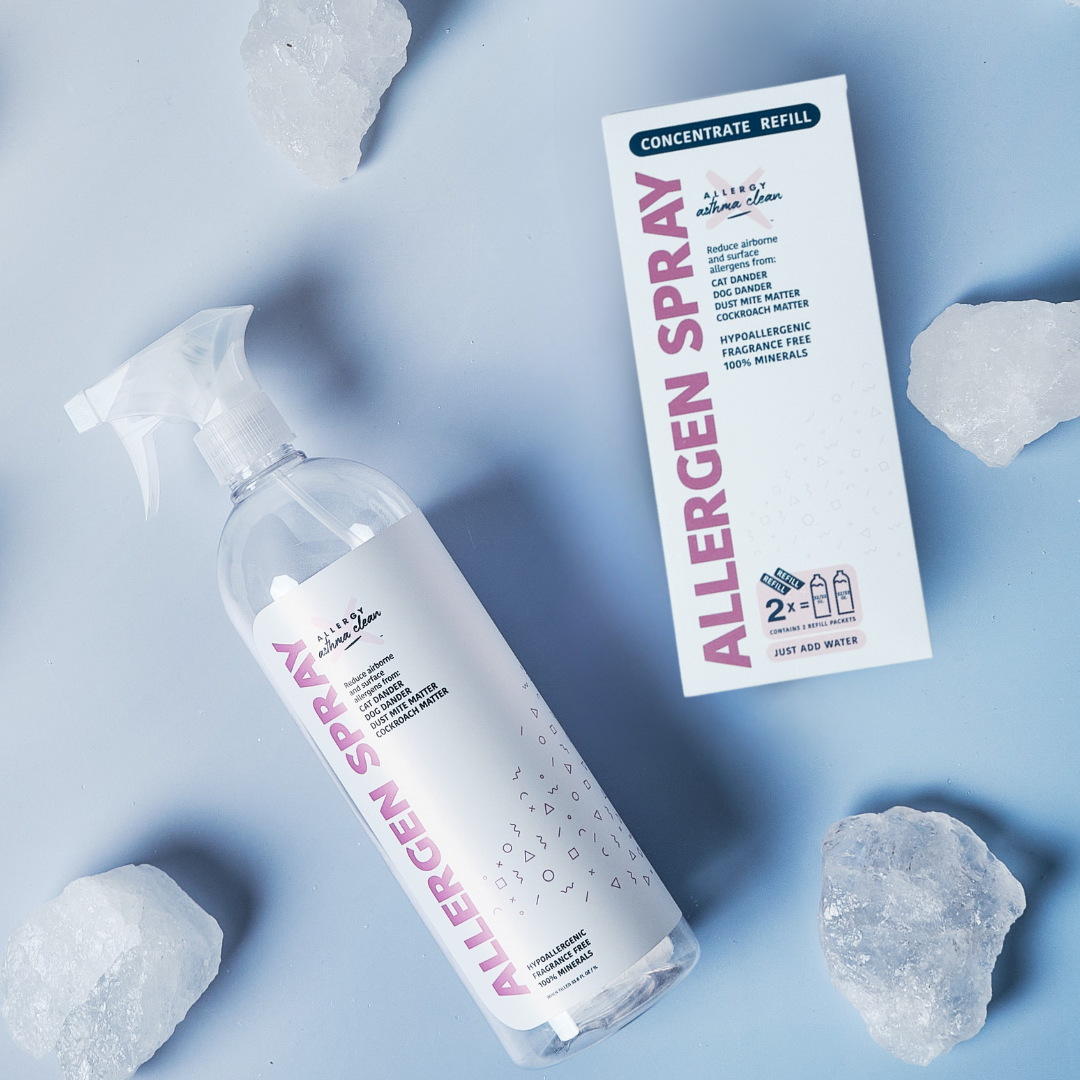
What about an allergen spray? Some people include an environmental spray in their home routine alongside cleaning and filtration. Allergy Defender Allergen Spray is a mineral-based spray intended for air and suitable home surfaces, not for direct use on pets. Its product page describes testing of specific allergen proteins. Laboratory reduction of a measured protein should never be presented as a guarantee of symptom relief.
Learn about Allergy Defender Allergen Spray: https://allergydefender.com/products/allergen-spray-33-8oz
Common questions Q: Can cat allergens travel on clothes? A: Yes. They can cling to fabric and be carried into places without cats.
Will opening windows remove allergens in carpets? A: Ventilation changes air exchange but does not wash allergen-containing dust out of furniture and carpeting.
Is vacuuming enough? A: Vacuuming can help, but may not remove everything trapped deep in upholstery or other fabrics. Repeat cleaning and attention to removable fabrics are useful.
For serious cat allergies or asthma, an allergist can help create a personalized medical plan. Environmental cleaning is not a substitute for prescribed treatment.
Sources: AAFA, AAAAI, and peer-reviewed cat removal study.