

Best Cat for Someone with Cat Allergies: The Science Behind 'Hypoallergenic' Breeds
No cat breed is truly hypoallergenic—all cats produce Fel d 1, the primary allergen. However, certain breeds (Siberian, Balinese, Russian Blue) naturally produce lower levels. Individual variation matters more than breed, and factors like sex, age, and grooming significantly affect allergen production. Genetic research in 2024-2025 shows promise for truly hypoallergenic cats in the future.
Key Takeaways
- No cat breed is allergen-free—even hairless Sphynx cats produce Fel d 1
- Some cats produce 80 times more Fel d 1 than others, regardless of breed
- Siberian cats show 50-75% naturally produce very low Fel d 1 in certain bloodlines
- Female cats produce less allergens than males that haven't been neutered; neutering reduces male production
- CRISPR gene editing has successfully created Fel d 1-deficient cats in laboratory settings (sounds promising!)
The Uncomfortable Truth About Hypoallergenic Cats
Let's get the most important fact out of the way first: there is no such thing as a truly hypoallergenic cat. Not one kitty. Zero kitties. None exist!
Every single cat—from Maine Coons to Sphynx, from mixed breeds to designer breeds—produces Fel d 1, the protein responsible for about 95% of cat allergies. It doesn't matter if they're hairless, short-haired, or have three layers of fluff. It doesn't matter if a breeder charged you $5,000 and promised you'd never sneeze. All cats produce this allergen.
But—and this is a significant but—some cats produce far less Fel d 1 than others. Research from 2024-2025 shows that individual cats can vary by as much as 80-fold in allergen production. This massive variation means that while no breed is allergen-free, some breeds and some individual cats are genuinely lower-allergen.
Understanding Fel d 1: Why It's Such a Problem
Fel d 1 is a small protein produced primarily in cat sebaceous glands, saliva, and lacrimal glands. When cats groom—which they do obsessively—they coat their entire body with saliva containing this protein. As their saliva dries, microscopic particles become airborne.
What makes Fel d 1 troublesome?
- It's extraordinarily lightweight—remains suspended in air for hours
- It's remarkably sticky—adheres to walls, furniture, and clothing
- It's exceptionally stable—stays active in environments for months
- It affects 15% of the U.S. population—roughly 50 million people
A 2024 genetic study analyzing 276 cats found striking variability in Fel d 1 genes, with more than 40% of amino acids differing between species. This suggests Fel d 1 has evolved differently across cat lineages and may not be essential for survival—opening the door to potential genetic solutions.
Breeds That Naturally Produce Less Fel d 1
While no breed is allergen-free, research and extensive testing have identified breeds that consistently show lower average Fel d 1 production. Here's what the science actually shows:
Siberian Cats: The Surprising Champion
This is the breed with the most compelling evidence. Multiple independent studies from 2023-2025 found that 50-75% of Siberian cats naturally produce very low or undetectable Fel d 1 levels, particularly in certain Russian bloodlines.
A 2024 study identified specific missense mutations in the Fel d 1 genes (CH1 and CH2) that reduce production. However, not all Siberians carry these variants, making individual testing crucial.
What makes this surprising? Siberians have thick, triple-layer coats—exactly the opposite of what you'd expect in a low-allergen cat. This proves that fur length and volume have little to do with allergen production.
Balinese/Javanese Cats
Often called "long-haired Siamese," these breeds consistently rank second in low allergen production. Their saliva contains fewer allergenic proteins compared to other breeds, and they're known for meticulous grooming habits that may reduce dander spread.
Russian Blue
These elegant cats with silvery-blue coats show consistently lower Fel d 1 production. Their short, dense double coat produces less dander overall, and individual testing often confirms lower allergen levels.
Devon Rex and Cornish Rex
These breeds have unique curly, minimal coats that reduce dander trapping. While they still produce Fel d 1, the reduced fur volume means less allergen distribution throughout your home.
Oriental Shorthair
With sleek single coats and very little undercoat, these cats shed less and distribute fewer allergens—though individual variation still matters significantly.
The Hairless Cat Myth: Why Sphynx Cats Aren't Hypoallergenic
Many people assume that hairless Sphynx cats must be hypoallergenic. This is completely wrong.
Sphynx cats produce just as much Fel d 1 as any other breed—it's secreted through their skin oils and saliva, not their (absent) fur. In fact, some allergy sufferers report worse reactions to Sphynx cats because the allergen sits directly on their oily skin, which you touch when you pet them.
Research confirms that to date, there is no scientific evidence for a truly hypoallergenic cat breed. Hairlessness doesn't reduce allergen production—it just changes how allergens are distributed.
Factors That Matter More Than Breed
Individual variation within breeds often exceeds variation between breeds. Here's what actually affects allergen levels:
Sex and Reproductive Status
Male cats produce significantly more Fel d 1 than females—sometimes 3-5 times more. Neutering reduces male production to levels comparable to females. If you're allergic and getting a cat, choosing a female or neutered male makes a meaningful difference.
Age
Older cats show modestly reduced Fel d 1 production, though the difference is usually too small to guide adoption decisions.
Individual Genetic Variation
A 2019 study found that Fel d 1 concentrations in cat saliva vary throughout the day and fluctuate seasonally within the same animal. Some cats naturally produce minimal allergen regardless of breed—which is why meeting and spending time with an individual cat before adoption is crucial.
Grooming Frequency
Regular brushing (ideally outdoors) and occasional bathing can temporarily reduce allergen levels by removing dander and excess saliva from fur.
The Future: Gene-Edited Hypoallergenic Cats
Here's where things get genuinely exciting. In February 2024, researchers successfully used CRISPR-Cas9 gene editing to create cats with dramatically reduced Fel d 1 production.
The study, published in Scientific Reports, targeted the Fel d 1 chain 2 (CH2) gene. The resulting cat—named Alsik—showed extremely low Fel d 1 levels compared to normal cats. The researchers also successfully cloned this gene-edited cat, proving the modification is inheritable.
A separate 2025 study achieved similar results targeting both CH1 and CH2 genes with 40% editing efficiency. No off-target effects were detected, though the cats haven't yet been tested with allergic humans to confirm reduced allergenicity.
Important considerations:
- The biological function of Fel d 1 remains unclear—we don't know if removing it affects cat health
- Ethical debates continue about genetic modification of companion animals
- Commercial availability is likely years away
- Regulatory approval will be required
Still, this research represents the first genuine path toward truly hypoallergenic cats.
How to Find a Lower-Allergen Cat
If you're determined to live with a cat despite allergies, here's the practical approach:
1.) Spend Extended Time with Individual Cats
Visit shelters or breeders multiple times. Spend 1-2 hours interacting with specific cats. Your reaction to an individual cat matters far more than breed designation.
2.) Consider Lower-Allergen Breeds
If buying from a breeder, prioritize Siberians (preferably from tested low-Fel d 1 lines), Balinese, or Russian Blue. Request allergen testing documentation if available.
3). Choose Female or Neutered Cats
This single factor can reduce your allergen exposure more than breed selection!
4.) Consider Adult Cats
With adult cats, you can test your actual reaction rather than guessing based on breed.
5.) Request a Trial Period
Many shelters and some breeders allow trial adoptions. This gives you time to assess whether you can tolerate living with that specific cat.
Beyond Breed: Creating a Lower-Allergen Home
Even with a lower-allergen cat, you'll need home strategies:
Surface Allergen Control
This is where most people fall short. Cat allergens accumulate on every surface your cat touches—furniture, carpets, bedding, curtains. Air purifiers can't reach these embedded particles.
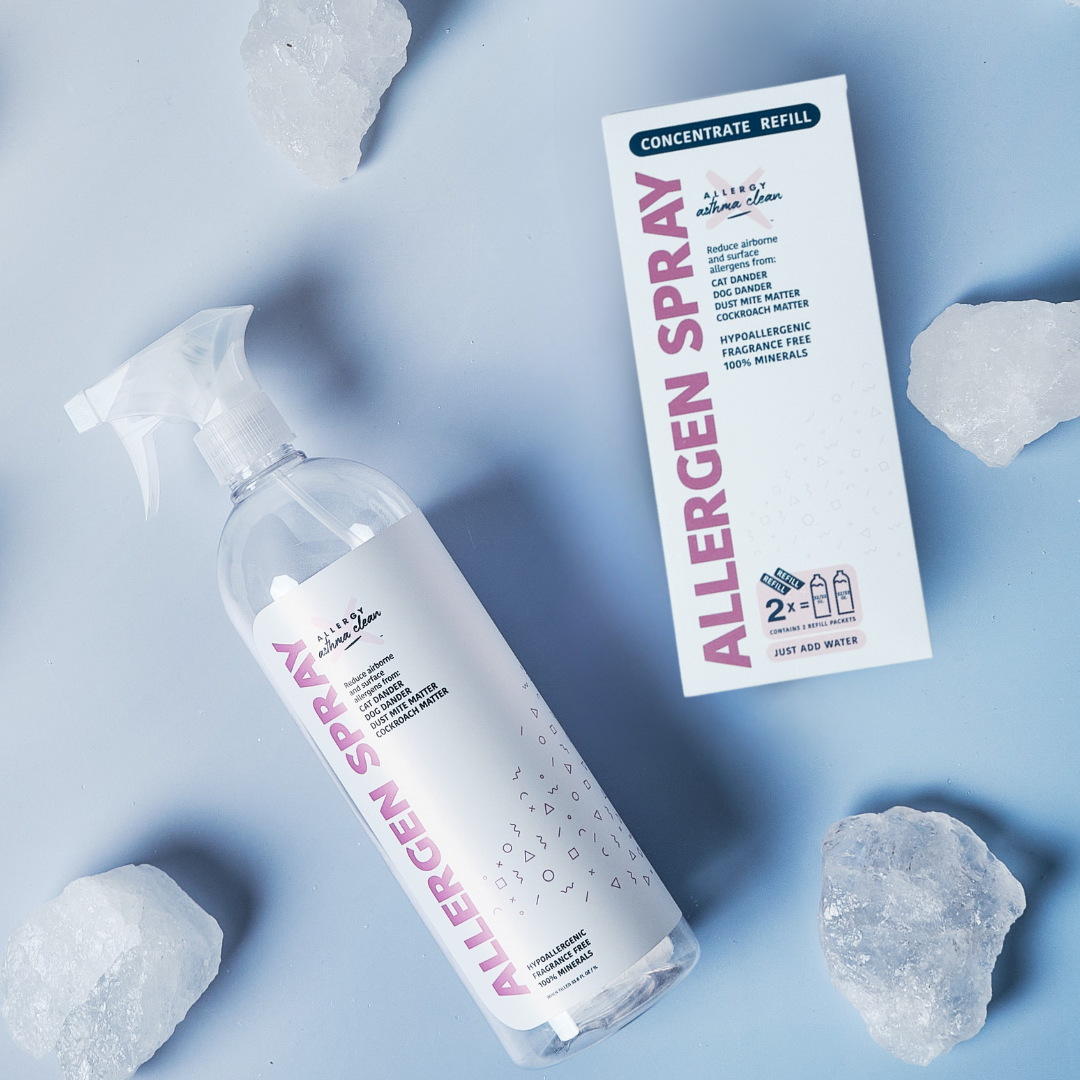
Products like Allergy Defender's Allergen Spray address this gap. This mineral-based formula works on both surfaces and in the air, neutralizing allergens at their source. Third-party testing shows up to 99% reduction of major allergens on surfaces—something breed selection alone can't achieve.
Air Filtration
True HEPA air purifiers running continuously in bedrooms and main living areas capture airborne allergens before they settle.
Regular Grooming
Brush your cat outdoors or in a well-ventilated area 2-3 times weekly. This removes loose fur and dander before it spreads throughout your home. They'll like this and it'll be relaxing for you!
Designated Cat-Free Zones
Keep your bedroom off-limits. Having one allergen-reduced space where you spend 7-8 hours nightly makes a significant difference in overall symptom burden.
What About Anti-Fel d 1 Cat Food?
Purina Pro Plan LiveClear deserves mention here. This food contains anti-Fel d 1 antibodies that neutralize the allergen in cat saliva. Clinical studies show 47% of cats fed this food showed decreased active Fel d 1 levels after three weeks.
A 2024 study found that cat-allergic patients living with cats fed LiveClear experienced 60% reduction in allergy symptoms. This approach works with any cat—you don't need a specific breed.
Real Talk: Can You Actually Live with a Cat?
The honest answer depends on your allergy severity:
Mild to Moderate Allergies:
Many people successfully manage symptoms with the right combination of cat selection, environmental controls, and occasional medication. Success rates improve dramatically when you:
- Choose a naturally lower-allergen cat (ideally Siberian from tested lines)
- Implement comprehensive environmental management
- Use anti-Fel d 1 cat food
- Maintain consistent cleaning and grooming routines
Severe Allergies or Asthma:
If cat exposure triggers severe asthma or anaphylactic reactions, no breed or environmental management strategy is safe. Some allergies are simply too serious to risk.
The Bottom Line on Hypoallergenic Cats
There is no truly hypoallergenic cat—yet. Every cat produces Fel d 1. However, certain breeds (particularly Siberians, Balinese, and Russian Blues) and certain individuals produce significantly less allergen than others.
Individual variation matters more than breed. Some cats produce 80 times less allergen than others, regardless of breed designation. This is why spending time with specific cats before adoption is non-negotiable.
Key factors to optimize:
- Choose naturally lower-allergen breeds (with individual testing if possible)
- Select female or neutered cats
- Spend extended time with individual cats before commitment
- Implement comprehensive home allergen control
- Consider anti-Fel d 1 cat foods
The future looks promising. CRISPR gene editing has successfully created genuinely low-allergen cats in laboratory settings. While commercial availability is years away, we may eventually see truly hypoallergenic cats become a reality.
Until then, success comes down to smart cat selection combined with rigorous home management. For comprehensive allergen control that works with any cat, explore our science-backed solutions at AllergyDefender.com. This Allergen Spray tackles Fel d 1 on surfaces and in the air—giving you the best possible chance of living comfortably with your kitty!
Core science about Fel d 1 and cat allergy
-
Cleveland CW, Davis BW, Khatri K, et al. Genetic diversity of the major cat allergen, Fel d 1. PNAS Nexus. 2024;3(11):pgae447. Shows Fel d 1 genes (CH1, CH2) are highly variable in 276 cats and suggests Fel d 1 may not be essential for survival.
-
Sartore S, Landoni E, Maione S, et al. Polymorphism analysis of Ch1 and Ch2 genes in the Siberian cat. Vet Sci. 2017;4(4):63. Finds multiple CH1/CH2 mutations in Siberian cats and a low‑Fel d 1 Siberian with specific missense variants.
-
Ohman JL Jr, Kendall S, Lowell FC. IgE antibody to cat allergens in an allergic population. J Allergy Clin Immunol. 1977;60:317‑323. Shows most cat‑allergic people make IgE to Fel d 1 (major allergen).
“No hypoallergenic breed”, sex, age, variation
-
Satorina J, Szalai K, Willensdorfer A, et al. Do hypoallergenic cats exist? Determination of Fel d 1 production in normal and “hypoallergenic” cat breeds. Clin Transl Allergy. 2014;4(Suppl 2):P11. Finds no truly allergen‑free breed and wide overlap between “hypoallergenic” and regular cats.
-
Bastien BC et al. Keep the cat, change the care pathway: a transformational approach to managing Fel d 1. Allergy. 2019;74:— (review). Summarizes data showing roughly 80‑fold differences in Fel d 1 between individual cats and higher production in intact males.
-
Wilson JM, Hales BJ, et al. Influence of time and phenotype on salivary Fel d 1 in domestic shorthair cats. J Feline Med Surg. 2019;21(7):—. Shows Fel d 1 in saliva changes over the day and season and that some cats are consistently low producers.
-
Do hypoallergenic cats and dogs exist? Ann Allergy Asthma Immunol. (Review). Concludes that no cat breed is proven hypoallergenic and that individual variation is more important than breed.
Genetic variation, Siberians, “low‑Fel d 1 lines”
-
Genetic diversity of the major cat allergen, Fel d 1 (Cleveland et al., 2024, PNAS Nexus). Large genetic study of 276 cats; 41% of CH1 and 58% of CH2 amino acids vary across cat lineages, supporting future genetic solutions like Fel d 1 knock‑out cats.
-
Polymorphism analysis of Ch1 and Ch2 genes in the Siberian cat (Sartore et al., 2017, Vet Sci). In 4 Siberians and 35 other cats, specific CH1/CH2 mutations appear in some Siberians; one Siberian with particular missense variants had very low salivary Fel d 1 (0.48 µg/mL vs >1.5 µg/mL in others).
CRISPR / gene‑edited “hypoallergenic” cats
-
Lee et al. (cited in Cleveland et al., 2024) – CRISPR editing of Fel d 1 CH2. Reported cats with CRISPR‑deleted CH2 had dramatically reduced Fel d 1 and remained healthy and active, indicating CH2 can be removed without obvious harm.
-
Targeted gene knock‑out of Fel d 1 in fetal fibroblasts using CRISPR–Cas9. 2025 proof‑of‑concept work showing efficient editing of Fel d 1 and laying groundwork for cloned, Fel d 1‑deficient cats.
Anti‑Fel d 1 cat food (Purina Pro Plan LiveClear)
-
Satyaraj E, Gardner C, Filipi I, et al. Proof‑of‑concept study of anti‑Fel d 1 IgY antibodies in cat food for the reduction of clinical signs of allergy in cat‑allergic people. Clin Transl Allergy. 2024;14(1):e12345 (exact citation details from paper). Shows that feeding cats food containing anti‑Fel d 1 IgY reduces active Fel d 1 on hair and improves symptoms in allergic people.
-
A novel approach to the reduction of cat allergen Fel d 1 through inclusion of an egg‑derived anti‑Fel d 1 IgY ingredient in cat diets. EMJ Allergy & Immunology Symposium, 2022. Reports median ~47% reduction in active Fel d 1 on hair after 3 weeks of the LiveClear diet.