

What are the Best Air Purifiers for Cat Allergies? What Science Says Actually Works
True HEPA air purifiers can remove 99.97% of airborne particles 0.3 microns in size, including cat dander. Research shows they reduce airborne cat allergens by up to 75%, though they don't address allergens already settled on surfaces. For comprehensive control, pair air purification with surface treatment and regular cleaning.
Key Takeaways
- HEPA filters capture 99.97% of particles 0.3 microns—smaller than cat allergen proteins
- Studies show 70% of cat-allergic participants experienced reduced symptoms with consistent HEPA use
- Air purifiers work on airborne allergens but don't remove particles from carpets, furniture, or bedding
- Run purifiers 4+ hours daily for effective allergen reduction
- Proper room coverage and placement dramatically affect effectiveness
The Honest Truth About Air Purifiers and Cat Allergies
Let's start with what you really want to know: can an air purifier actually make a difference if you're allergic to cats? The short answer is yes—but not in the way most people think.
Air purifiers won't cure your cat allergy. They won't eliminate every allergen in your home. But research consistently shows that high-quality HEPA air purifiers can reduce airborne cat allergens by 75% or more, and about 70% of cat-allergic people using them experience meaningfully reduced symptoms.
But, here's the catch nobody talks about: air purifiers only work on particles floating in the air. They do absolutely nothing for the allergens already embedded in your carpet, coating your couch, or lurking in your bedding. This is why air purifiers alone rarely solve the problem completely.
Understanding Cat Allergens: Why They're So Persistent
Fel d 1—the protein that causes most cat allergies—is diabolically effective at spreading throughout your home. It's produced in cat saliva, sebaceous glands, and skin cells. When your cat grooms, which they do constantly, they coat their fur with this protein. As they shed and move around, microscopic particles become airborne.
What makes Fel d 1 particularly troublesome?
- It's incredibly lightweight—stays suspended in air for hours
- It's exceptionally sticky—clings to walls, fabrics, and surfaces
- It's surprisingly stable—remains active for months
- It's absurdly small—about 2.5 microns, roughly one-tenth the width of a human hair
This combination is why you can walk into a home that hasn't had a cat in six months and still have an allergic reaction. The allergens persist even after the cat is long gone!
The Science Behind HEPA Filtration
HEPA stands for High-Efficiency Particulate Air. To earn the "True HEPA" designation, a filter must capture 99.97% of particles that are 0.3 microns in diameter. This isn't arbitrary—0.3 microns is actually the hardest particle size to filter, making it the gold standard for testing.
Cat allergen particles range from about 2.5 to 10 microns—significantly larger than 0.3 microns. This means HEPA filters are actually even more effective at capturing cat dander than the 99.97% specification suggests.
What the Research Shows
A landmark study published in the Journal of Allergy and Clinical Immunology found that HEPA air purifiers reduced airborne cat allergens by up to 75%. Another study using wearable air purifiers in an allergen exposure chamber showed symptom reduction of 50-60% for cat-allergic participants.
However—and this is critical—these same studies found no significant reduction in settled dust allergen levels. The purifiers cleaned the air beautifully but didn't touch the allergens already on surfaces.
What to Look for in an Air Purifier for Cat Allergies
Not all air purifiers are created equal, and marketing claims can be misleading. Here's what actually matters:
1.) True HEPA Filtration (essential)
Look for "True HEPA" or "H13 HEPA" certification. Avoid marketing terms like "HEPA-type" or "HEPA-style"—these aren't held to the same standards and may only filter 85-90% of particles.
2.) Appropriate Room Coverage (CADR Rating)
Check the Clean Air Delivery Rate (CADR) and recommended room size. A purifier that's too small for your space will run constantly and still underperform. As a rule of thumb, look for a CADR rating that's at least 2/3 of your room's square footage.
I was given an air purifer. Here's what I did to find the CADR. I measured the room- it was 11x11 including 7x5. That is 156 sq ft. I typed in the name and model number of my air purifier. AI said it was rated for rooms up to 361 sq ft. It was good to go!
For a 300 sq ft bedroom, you need a minimum CADR of 200. For larger living spaces (500-600 sq ft), look for CADR ratings of 350+.
3.) Multiple Air Changes Per Hour
The best purifiers cycle all the air in a room 4-6 times per hour. This is especially important in homes with cats because allergens are constantly being generated. AI told me my unit will filter the air 11 times every hour.
4.) Activated Carbon Filter (for odor control)
While HEPA filters handle particles, activated carbon filters absorb gaseous pollutants and odors. This isn't critical for allergen control, but it makes living with cats more pleasant. Look for substantial carbon layers—thin carbon pre-filters don't do much.
5.) Quiet Operation
You need to run these units 4+ hours daily for effectiveness. If they're too loud, you won't use them consistently. Look for units under 50 decibels on standard settings. I asked AI about my unit. It said it ranges from 24-45 decibels.
Strategic Placement: Where You Put The Unit Matters
Even the best air purifier won't help if it's positioned poorly. Here's how to maximize effectiveness:
Bedroom Placement (Priority #1)
You spend 7-8 hours per night in your bedroom. Reducing allergen exposure here has the biggest impact on your overall symptoms. Place the purifier 3-5 feet from your bed with clear airflow around all sides.
Main Living Areas
Position purifiers where your cat spends the most time—usually living rooms or wherever their favorite nap spot is. This intercepts allergens at the source.
What NOT to Do:
- Don't place purifiers in corners—this restricts airflow
- Don't put them against walls or behind furniture
- Don't expect one unit to cover your entire home—you need multiple purifiers
How Long to Run Your Air Purifier
The Asthma and Allergy Foundation of America recommends running air purifiers at least 4 hours daily for effective allergen reduction. However, for maximum benefit—especially in homes with cats—continuous operation is ideal.
Modern HEPA purifiers are surprisingly energy-efficient, typically using 50-100 watts on standard settings. That's about the same as a laptop. Running 24/7 costs roughly $10-20 monthly in electricity. Again I checked AI and it told me it costs 5.99 per month in my area.
What Air Purifiers DON'T Do (and why that matters)
Here's where people get disappointed: air purifiers only clean air that passes through them.
They don't:
- Remove allergens from carpets, rugs, or upholstery
- Clean bedding, curtains, or clothing
- Prevent your cat from producing allergens
- Reach into closets, under beds, or behind furniture
A 2024 review in the International Journal of Molecular Sciences confirmed that while air purifiers can remove over 90% of airborne pet allergens, many allergens remain trapped in soft furnishings. This is why comprehensive allergen control requires a multi-pronged approach.
Air Purifiers vs. Surface Treatment: Understanding the Gap
Think of allergen management like a two-part problem:
Part 1: Airborne Allergens
Air purifiers excel here. They continuously filter particles floating in your breathing zone, preventing constant re-exposure.
Part 2: Surface Allergens
This is where air purifiers fall short. Allergens embedded in carpets, coating your couch, or settled on bedding require different solutions.
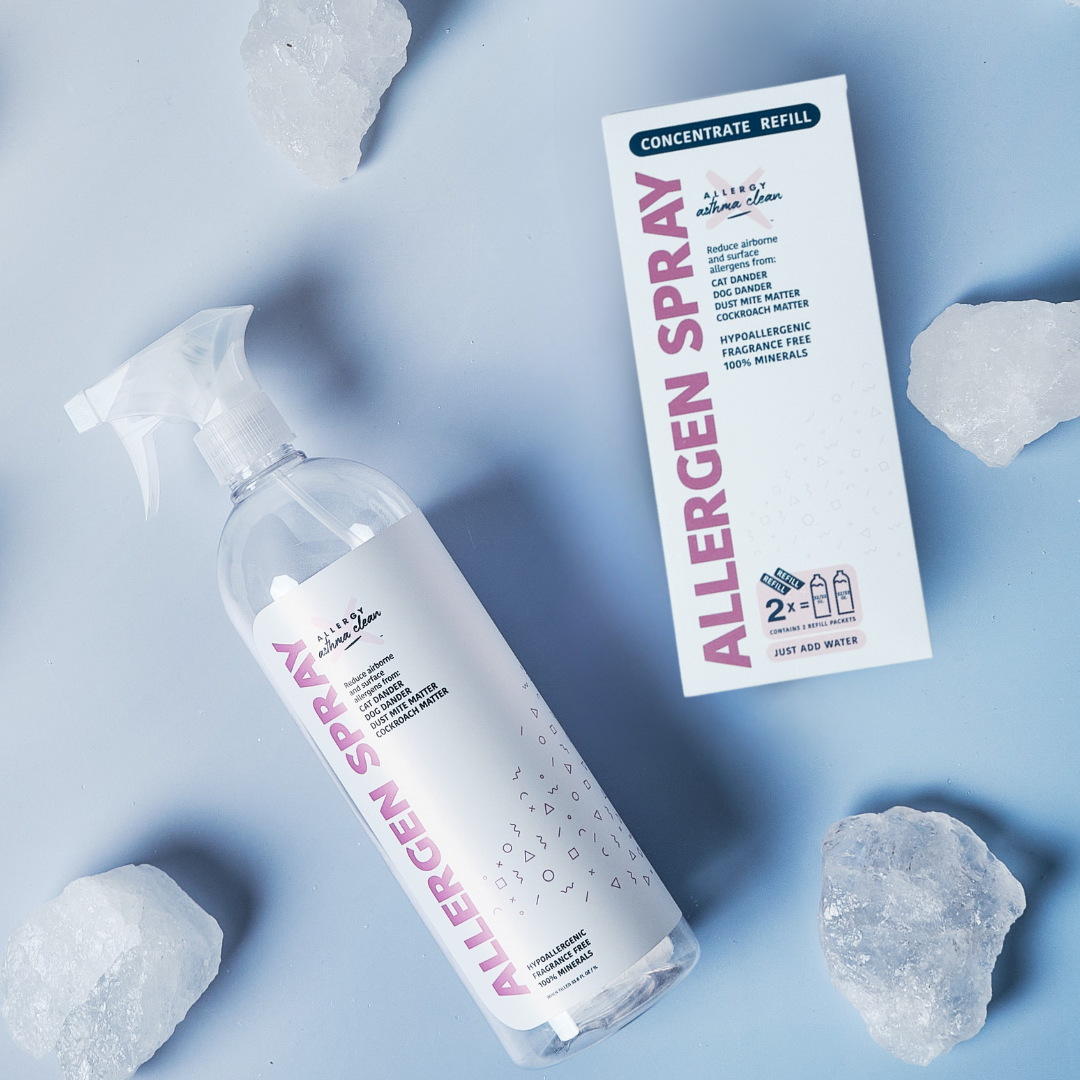
This is exactly why we developed Allergy Defender's Allergen Spray. While air purifiers handle airborne particles, our mineral-based formula works on surfaces AND in the air—neutralizing allergens at their source. Third-party testing shows up to 99% reduction of major allergens on surfaces, filling the gap that air purifiers can't address!
The most effective approach? Use both strategies. Use air purifiers for continuous airborne filtration and use allergen-neutralizing sprays for surfaces, furniture, and bedding.
Maintenance: The Hidden Cost Nobody Talks About
HEPA filters don't last forever. Depending on usage and air quality, you'll need to replace them every 6-12 months. Replacement filters typically cost $50-150. This ongoing expense adds up.
Maintenance Tips:
- Vacuum pre-filters monthly to extend HEPA filter life
- Check filter replacement indicators—don't wait until they're completely clogged
- Buy replacement filters in bulk to save money
- Clean the exterior housing every few weeks to prevent dust buildup
Real Results: What Users Experience
Based on clinical studies and consumer feedback:
Positive Outcomes:
- Most people notice improvement within 1-2 weeks
- Nighttime symptoms typically improve first (since purifiers run continuously in bedrooms)
- 70% of consistent users report reduced medication needs
- Sleep quality often improves significantly
Common Disappointments:
- Expecting complete allergy elimination
- Buying units too small for the space
- Not running them long enough or consistently enough
- Neglecting surface allergens while only addressing airborne particles
Building Your Complete Allergen Defense Strategy
For maximum allergen control, combine air purification with these proven strategies:
1.) Surface Allergen Neutralization
Use allergen-neutralizing sprays on carpets, furniture, bedding, and other soft surfaces. Our Allergen Spray at AllergyDefender.com uses a mineral-based formula that works on contact to reduce allergens by up to 99% on surfaces.
2.) Regular HEPA Vacuuming
Vacuum 2-3 times weekly with a HEPA-filtered vacuum. Standard vacuums can actually make allergies worse by stirring allergens into the air.
3.) Designated Cat-Free Zones
Keep bedrooms off-limits to create low-allergen sanctuaries. This gives your immune system a break for 7-8 hours nightly.
4.) Regular Grooming
Brush your cat outdoors or in a ventilated area to capture loose fur and dander before it spreads throughout your home.
What's The Bottom Line on Air Purifiers and Cat Allergies?
Air purifiers—particularly those with True HEPA filtration—are one of the most effective tools for managing cat allergies. Research consistently shows they reduce airborne allergens by 75% or more, and about 70% of users experience meaningful symptom improvement.
But they're not magic. They work exclusively on airborne particles and do nothing for the allergens embedded in your carpets, couch, or bedding. For comprehensive control, you need to address both airborne AND surface allergens.
The winning combination:
- True HEPA air purifiers in bedrooms and main living areas
- Run them continuously (or at least 4+ hours daily)
- Pair with an allergen product that neutrlizes allergens on surfaces
- Maintain consistent grooming and cleaning routines
For the surface side of the equation—the part air purifiers can't handle—explore our science-backed and top-rated solutions at AllergyDefender.com. This Allergen Spray tackles dander on furniture, carpets, and bedding—creating the complete defense system you and your allergies deserve.